
Oslo Fotokunstskole
- Photography has a toxic and sticky history
2/20/2026
Stikkord:
.jpeg)
Sustainable Darkroom will be coming to Oslo Fotokunstskole on Friday, March 20. What will you be presenting this evening?
At Oslo Fotokunstskole we’ll be sharing critical insights into research and projects from Sustainable Darkroom. Linking theory, politics and philosophy with practical, material developments to suggest a total transformation of the way photographers work, think, and exist in the living world. Engaged with a present understanding of ecology. Edd and I will also be expanding on recent personal areas of research and creative projects.

Sustainable Darkroom is run by yourself and Edd Carr. Can you tell us about yourselves and the themes you work with?
Our individual practices are very much influenced by and also influence the work of Sustainable Darkroom. My co-director, Edd Carr adapts analogue photographic processes into moving image and is also researching vegan alternatives to gelatin for use in silver gelatin prints and film.
My practice adapts around materials and environments, weaving photographic knowledge, processes and systems into ecological frameworks. Using a DIY, low-impact, low-waste approach, I expand on photography to think through complex relationships between materials, making and capitalism. The works, often move away from the representational, as I allow the materials or landscape to guide and direct the formation of the image. Letting go of expectations and relinquishing control become part of the rhythm of making.

What made you start working with sustainable photography?
My interest in analogue photography started about 15 years ago, I was lucky enough to study in a college which had darkroom. When I say a darkroom, it was more like a cupboard. It was incredibly simple, but it was enough. My fascination and love for photography was nurtured in the darkroom. it was in the darkroom where I became transfixed with the alchemy, the physicality and rituality of the process. Intuitively experimenting in the darkroom lead me quickly down a slippery slope to more ‘alternative’ photographic processes. I soon realised that, for me, the tangibility of working with materials with my hands, was really important, but the materials themselves were also critical.
As my work continued to materially engage in photography, I was becoming extremely environmentally aware in other areas of my life. All my work was addressing issues tied to the ecological crisis. So between these two positions, I reached a point where I realised that there was lots of contradictions between my ethics and the materials and systems that my creative practice was being upheld by. I got to a point where I felt that I couldn’t consciously keep going into these traditional darkroom spaces.
Soon after this, in 2019, I founded sustainable Darkroom.
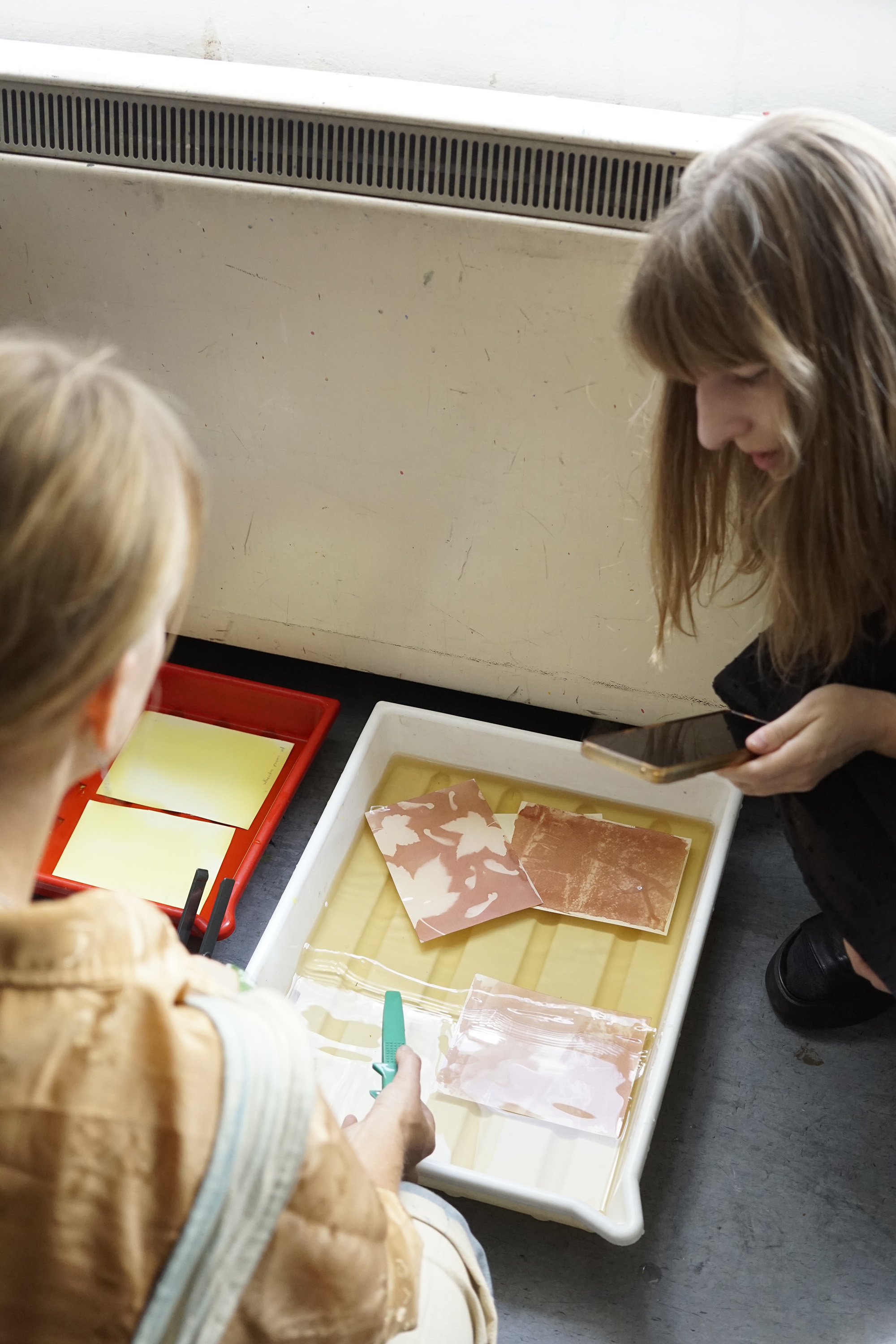
Why do we need a more sustainable approach to analogue photography?
Photography has a toxic and sticky history, i’ll take a moment to look deeper into a few of these complex material relations:
Photo chemistries:
All of the main commercial photographic developing agents are derived from fossil fuels or coal-based feedstocks. Chemicals from other analogue photographic process contain toxic substances such as mercury, bichromate, potassium iodine, ether, selenium, cadmium and lead, which can harm both humans and the environment. Exposure to these chemicals can result in respiratory problems, skin irritation, organ damage, cancer or death.
Gelatin:
Today, to produce film and paper, high-grade gelatin, created from cow bones, is required; this is known as Type B ossein gelatin. The rapid rise of photography meant an increasing demand for gelatin, resulting in a dependency on this material that would have been impossible to facilitate without the revolution of a separate, yet interconnected, industry: intensive animal agriculture. As meat became ever cheaper, profit margins of the industry were kept afloat by the value of these ‘by-products’, intertwining the two industries and their dependancy on each other.
Silver:
Silver is one of the most precious metals in the world and its scarcity is a major concern. Its histories are deeply intertwined with colonial European powers, where silver mines were dug, often taking the land of indigenous peoples and polluting their rivers and lake beds. To this day, new silver mines are being excavated in remote areas and or developing countries, with little consultation with the communities that reside there. Waterways and soils are very easily contaminated during extraction, rendering whole areas inhabitable for both humans and non-humans.
Furthermore, very little of our silver comes from recycled sources: in 2022 173 million ounces of silver were recycled compared to the 917 million ounces extracted from mines across the world. That’s just 15% of the consumption of silver. In comparison, 60% of all copper comes from recycled sources and about 50% of steel.
Resin:
As for the polyethylene resin, this is the same stuff that plastic shopping bags, drain pipes and medical supplies are made out of. It does not biodegrade and as it slowly breaks down, it forms micro plastics in landfills. These microplastics are slowly making their way into our water, our food and our bodies.

You work internationally and are coming to Oslo straight from a workshop in Gothenburg. Is there strong interest in sustainable photography?
Over the past 7 years we have worked hard to share our work and support individuals all over the world. We’ve had people from nearly every continent engage with the Sustainable Darkroom, and it’s always exciting to hear how our research has positively impacted someone’s practice, or to advise on best darkroom practices for a space halfway around the planet!
We now see questions of sustainability becoming rooted into university modules permeating out across far more areas of photography than just the darkroom. It’s great to have been part of this change.
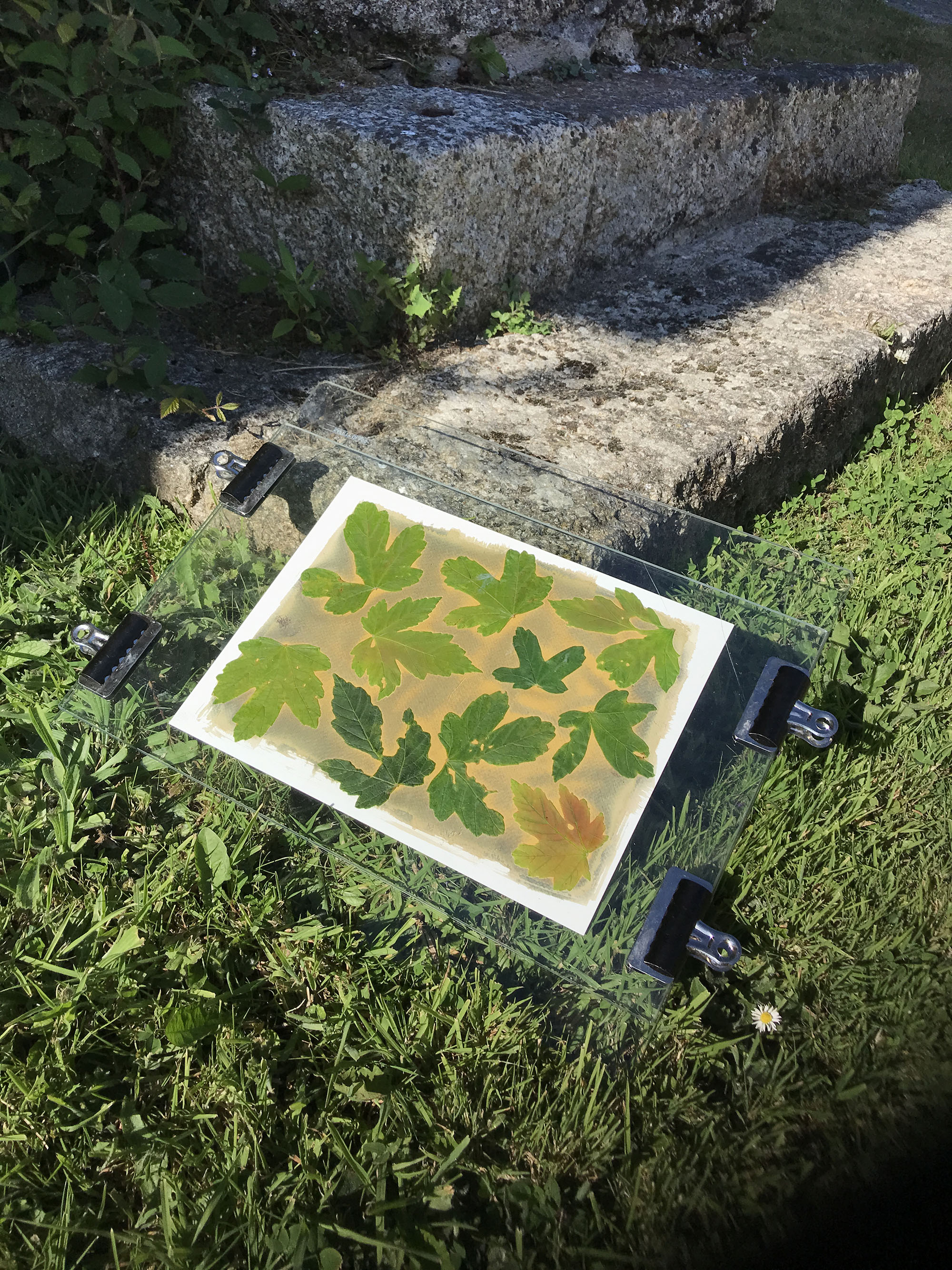
While in Oslo, you will be holding a cuprotype workshop at Cyan. Can you tell us about this technique?
The cuprotype is process that utilises both copper and iron based salts; copper sulphate and ferric ammonium citrate. It’s a print-out process, similar to the cyanotype but with longer exposure times. We’ll be using a UV exposure unit for our exposures at Cyan, but otherwise it’s a lovely process to work with when the sun is out.
It’s got an interesting history, which goes all the way back to 1944, but very little is known of it compared to other processes like the cyanotype. It’s been taking a back seat for a long-time, this is most likely due to it’s slow exposure times! But since around 2007, a number of practitioners have been experimenting with new recipes for it, bringing it into contemporary practice. These individuals include Jim Patterson, Jan de Jong, Niranjan Patel, Peter Friedrichsen, Frank Gorga and Andres Pardo.
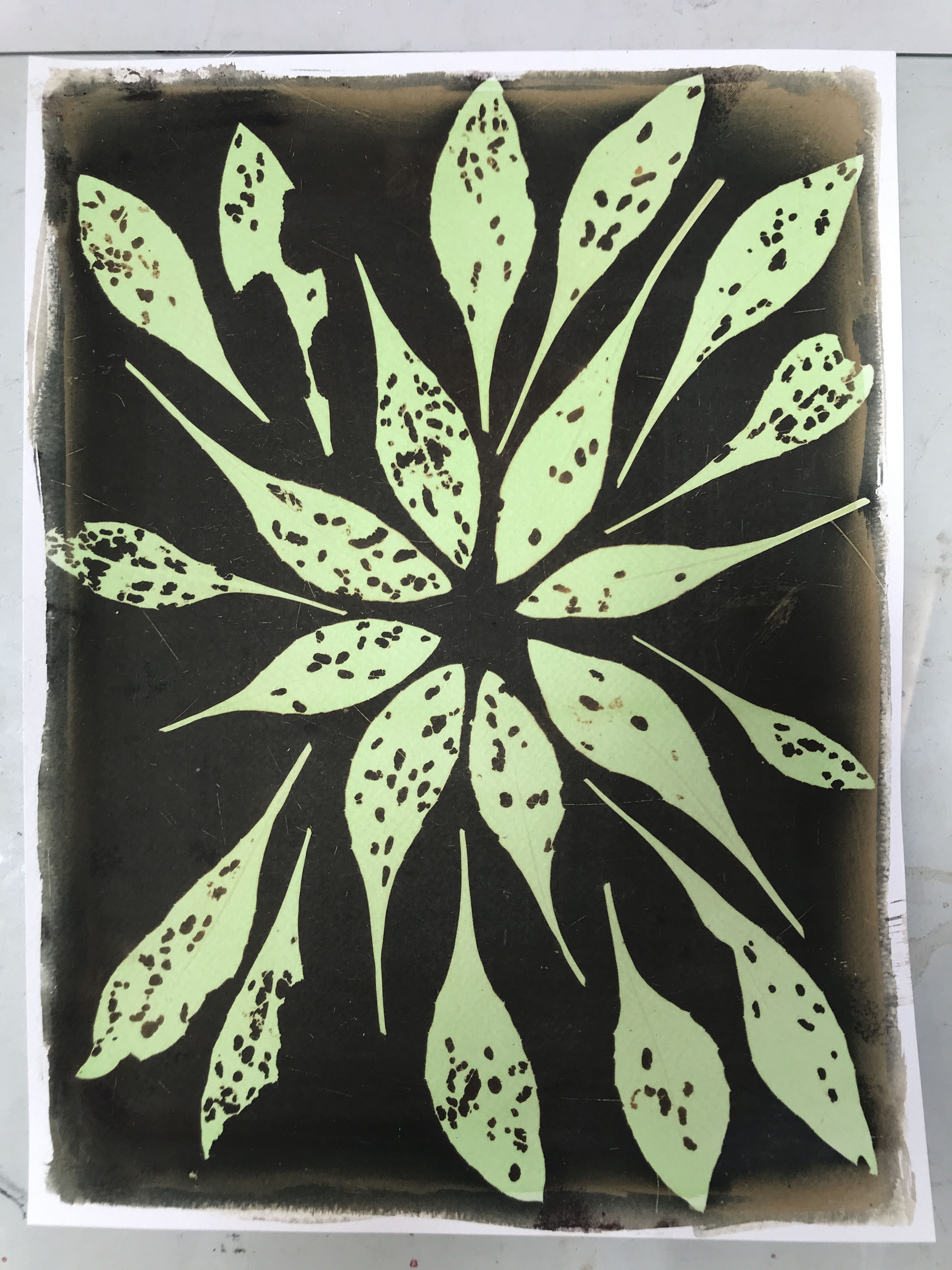
Despite it’s long exposure times, it has a wonderful range of opportunities for toning, split toning and layering with cyanotypes too. Allowing you to build up an amazing depth of layers and tones. It’s original tone is a yellow colour, which can be a bit unstable. This yellow colour then can be toned using another iron salt to achieve a range of red tones.
Today, it is increasingly common for images to be generated using artificial intelligence. Is this a sustainable technology?
Far from it!
This question is actually something that our next Sustainable Darkroom book, Bury After Reading: The Afterlife of Images, is going to touch on. We’ve recently selected 11 writers from an open call who will be writing essays and creative texts exploring the afterlives and futures of photography. A couple of the essays in the book will address the rise of Ai imagery and what it means for the future of photography.
WELCOME TO OPEN LECTURE WITH UK-BASED, ARTIST-LED ORGANIZATION SUSTAINABLE DARKROOM AT OSLO FOTOKUNSTSKOLE FRIDAY MARCH 20TH. THE LECTURE IS PART OF OPEN DAY AT OSLO FOTOKUNSTSKOLE, SEE FULL PROGRAM HERE. READ MORE ABOUT SUSTAINABLE DARKROOM HERE AND ABOUT THE WORKSHOPS AT CYAN HERE.
Ønsker du å studere fotografi eller vil du studere videokunst og film? Les mer om Oslo Fotokunstskole og søk skoleplass for heltids- og deltidsstudium (kveld). Skolen tilbyr undervisning i de to linjene «fotografi» og «film- og videokunst». Skolen tilbyr også fotokurs. Oslo Fotokunstskole er en fotoskole i Oslo for deg som ønsker å utforske dine kreative evner i et engasjerende og dynamisk miljø. Skolen ble etablert i 1989 og holder til i velutstyrte lokaler ved Alexander Kiellands Plass. Les mer om hvordan du kan starte din fotoutdanningeller filmutdanning på oslofotokunstskole.no.